



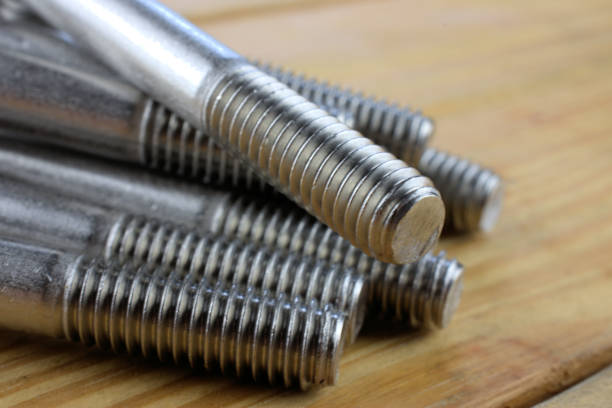
Industrial equipment manufacturers require high-precision, heavy-duty mechanical fasteners to secure complex machine housings today. Furthermore, standard single-threaded bolts often loosen under continuous vibrational stress across heavy industrial installations. Fortunately, deploying high-grade GB/T 898 stainless steel stud bolts ensures stable dual-end engagement while maintaining strict lead-free compliance across modern industrial manufacturing standards.
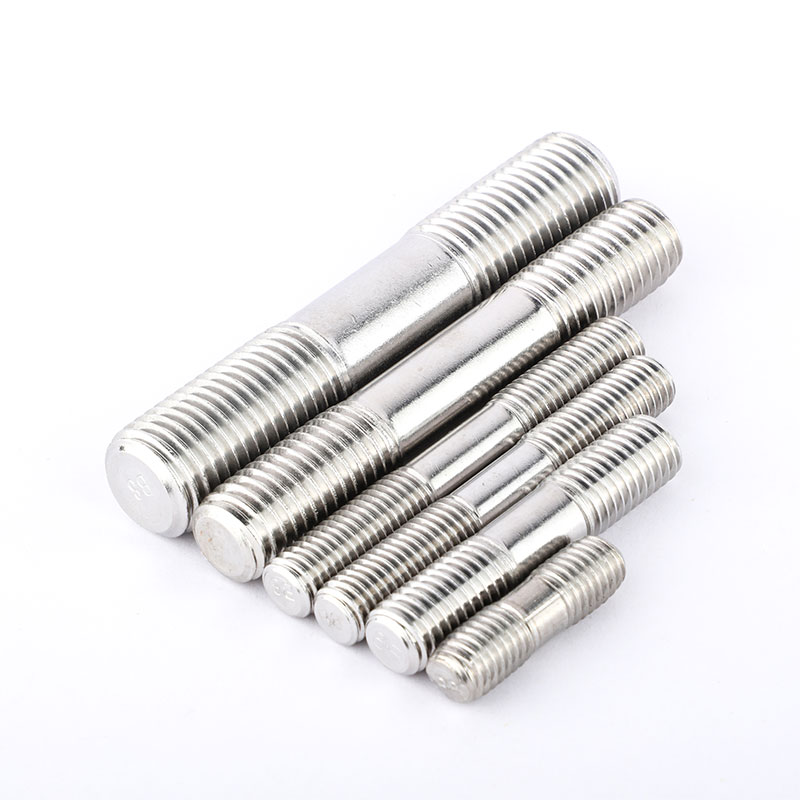
The Shenle 304 Stainless Steel Double-Ended Stud (GB/T 898) delivers high tensile strength and chemical resistance effortlessly. Manufactured from premium austenitic 304 stainless steel, this double-ended stud creates permanent rigid connections without requiring nuts on tapped machine bases. Moreover, industrial mechanical engineers build long-lasting structural assemblies using precise metric thread pitch profiles. Explore our product-category to discover certified industrial fasteners and specialized double-ended threaded rods.
In addition, clean surface finishing processes eliminate sharp manufacturing burrs for smooth manual handling and installation. Consequently, assembly line technicians complete structural flange connections without experiencing thread galling or jamming. Furthermore, full compliance with GB/T 898 national standards guarantees consistent dimensional tolerances across large-scale industrial production runs.

Industrial Fastening Bottlenecks: Resolving 4 Machine Assembly Issues
Mechanical assembly teams encounter severe chemical corrosion, vibration loosening, space-constrained housing joints, and thread dimension variance regularly. Below, we examine four primary industrial fastening challenges and our technical stud solutions.
Rapid Fastener Oxidation in Humid Manufacturing Environments
Standard carbon steel bolts rust rapidly when exposed to high ambient humidity and industrial chemical washdowns. Specifically, surface rust weakens bolt shear strength, causing joint failure and expensive unscheduled machinery downtime. Therefore, maintenance managers require corrosion-proof alloy fasteners engineered for severe operational environments. Consequently, deploying a corrosion-resistant fastener extends equipment service life across damp factory floors significantly.
Example: A food processing plant washes down stainless steel sorting machinery with aggressive chemical sanitizers daily. Standard zinc-plated fasteners corrode within weeks, contaminating processing lines and seizing component threads permanently. Check our technical-guide for stainless steel grade selection and anti-galling installation setup techniques.
In contrast, our 304 stainless steel studs form a passive chromium oxide surface layer naturally. Furthermore, cleaned natural finishes resist organic acids, moisture, and industrial cleaning agents effortlessly. Thus, plant engineers maintain sterile, rust-free equipment structures while eliminating frequent fastener replacement costs.
High Joint Separation Risks Under Continuous Machine Vibration
Single-ended bolts inserted into tapped blind holes frequently back out under intense operational motor vibrations. Specifically, cyclic mechanical shock loosens standard thread engagement, causing dangerous structural misalignments across heavy gearbox housings. Therefore, equipment designers require double-ended thread engagement to lock components securely against machine bases. Consequently, using a 304 stainless steel double-ended stud preserves joint clamping force reliably.
Example: A high-speed industrial pump housing vibrates continuously during continuous daily liquid pumping operations. Standard single-ended mounting bolts loosen every month, causing fluid leaks and severe shaft misalignments. In contrast, our double-ended stud screws permanently into the base block while securing the cover plate tightly.
Additionally, precise metric thread cuts maximize thread surface contact inside tapped base mounting holes. Furthermore, uniform torque distribution prevents localized stress points along the entire threaded rod length. As a result, machinery builders eliminate vibration-induced joint separation during high-speed equipment operations.
Tight Spatial Constraints Preventing Rear Nut Access
Compact mechanical assemblies often lack adequate physical space for wrench clearance behind component mounting flanges. Specifically, installing nuts on the back side of thick cast iron housings proves physically impossible in tight machine frames. Therefore, mechanical technicians need blind-hole fastening solutions that eliminate rear nut placement requirements completely. Consequently, installing double-ended stud bolts for machinery assembly simplifies tight space installation workflows.
Example: An automation integrator mounts heavy electric drive motors inside narrow sheet metal enclosure frames. Technicians cannot reach behind the internal cast frame to hold traditional backing nuts with standard wrenches. In contrast, our GB/T 898 stud anchors firmly into tapped housing holes from the front side alone.
Additionally, the outer threaded end accepts standard hex nuts easily, securing the motor flange externally. Furthermore, smooth thread chamfers guide nuts quickly onto the outer shaft without cross-threading risks. Consequently, assembly line workers complete motor installations in half the time without requiring rear panel access.
Dimensional Variations Disruption in Automated Assembly Lines
Off-spec commercial studs with inconsistent thread pitch dimensions jam automated assembly tools during high-speed production. Specifically, diameter variations strain automatic nut runners, causing costly line shutdowns and damaged internal threads. However, strict national standard manufacturing protocols guarantee precise thread pitch uniformity across every production lot.
Example: An pump manufacturer uses non-standard imported studs on an automated robotic chassis assembly line. Irregular thread pitch tolerances jam robotic arms, stopping production lines multiple times each day. In contrast, our studs strictly adhere to GB/T 898 dimensional standards, like the M6×50 specification.
Additionally, accurate 6mm thread diameters and 50mm total lengths guarantee seamless automated tool compatibility. Furthermore, rigorous dimensional quality control ensures uniform thread engagement across every manufactured batch. Consequently, factory managers maintain uninterrupted automated manufacturing cycles while reducing component scrap rates.
Technical Solutions: Precision Engineering for GB/T 898 Stud Bolts
Superior industrial fasteners combine high-purity austenitic stainless steel, standardized double-ended thread geometry, clean surface treatments, and precise metric pitch profiles. Furthermore, precision manufacturing guarantees long-term joint integrity across demanding industrial applications.
Premium 304 Stainless Steel and GB/T 898 Standard Geometry
Engineers design our metric GB/T 898 stainless steel studs using high-density 304 stainless steel alloys. Specifically, balanced nickel and chromium content delivers superior yield strength alongside high tensile load resistance. Furthermore, double-ended thread configurations permit independent torque application on both structural mating components. Consequently, engineers utilize GB/T 898 stainless steel stud bolts designed for heavy-duty mechanical connections.
In addition, standard metric threading guarantees broad compatibility with commercial nuts, tapped holes, and tapped inserts. Specifically, sizes like M6×50 supply reliable clamping force for medium-duty machinery frames. Discover complete dimensional sizing options in our product-category industrial hardware catalog.
Cleaned Natural Finish and Advanced Thread Precision
Our manufacturing process includes thorough chemical cleaning to remove cutting oils and metallic micro-burrs completely. Specifically, smooth thread surfaces reduce friction coefficients, preventing galling during high-torque manual installation. Learn technical assembly practices in our technical-guide stainless steel torque limits and thread galling prevention guide.
Moreover, natural stainless steel finishes preserve metallic luster without requiring secondary chemical plating layers. Thus, environmental safety compliance remains uncompromised across cleanroom, food, and pharmaceutical applications. Consequently, plant managers specify Shenle double-ended studs with absolute confidence for sensitive production environments.
Product Parameter & Specification Overview
Review key technical specifications comparing standard commercial studs against our Shenle GB/T 898 304 Stainless Steel Studs.
| Fastener Parameter / Feature | Standard Commercial Steel Stud | Shenle 304 Stainless Steel Double-Ended Stud | Industrial & Operational Advantage |
| Material Composition | Low-Carbon Steel (Zinc-Plated) | Premium Austenitic 304 Stainless Steel | Resists Harsh Chemical Corrosion and High Environmental Humidity |
| Manufacturing Standard | Non-Standard / Variable Spec | GB/T 898 National Standard Compliant | Guarantees Precise Dimensional Uniformity for Automated Assembly |
| Surface Treatment | Basic Electro-Galvanized Coating | Cleaned Natural Stainless Steel Finish | Eliminates Surface Burrs and Prevents Chemical Plating Flaking |
| Threading Configuration | Continuous Fully-Threaded Rod | Double-Ended Metric Threading | Allows Secure Anchor Connections in Tapped Machine Base Holes |
| Vibration & Load Stability | High Risk of Thread Back-Out | High Tensile Yield & Clamping Stability | Maintains Tight Mechanical Joints Under Continuous Motor Shock |
| Installation Access | Requires Dual-Side Access | Single-Side Front Installation | Enables Easy Assembly in Space-Constrained Equipment Housings |
Versatile Applications in Machinery Assembly and Structural Engineering
Modern industrial manufacturing demands versatile mechanical fasteners that perform reliably across diverse operational environments. Furthermore, adaptable double-ended studs perform exceptionally inside machinery housings, chemical processing equipment, motor bases, and structural frames.
For instance, industrial pump manufacturers utilize double-ended studs to secure high-pressure fluid valve manifolds. Specifically, corrosion-resistant 304 stainless steel prevents joint leakage despite constant exposure to aggressive fluids. Consequently, pump operators maintain steady hydraulic pressure without experiencing fastener deterioration.
Additionally, automated equipment integrators install GB/T 898 studs to mount robotic actuators onto steel baseplates. Precise metric thread geometry guarantees exact alignment, preserving robotic positioning accuracy across millions of operational cycles. Thus, automation engineers achieve high operational precision while reducing routine mechanical maintenance overhead. Therefore, our GB/T 898 stainless steel stud bolts successfully combine corrosion resistance, precise standardized dimensions, and dual-ended joint reliability.