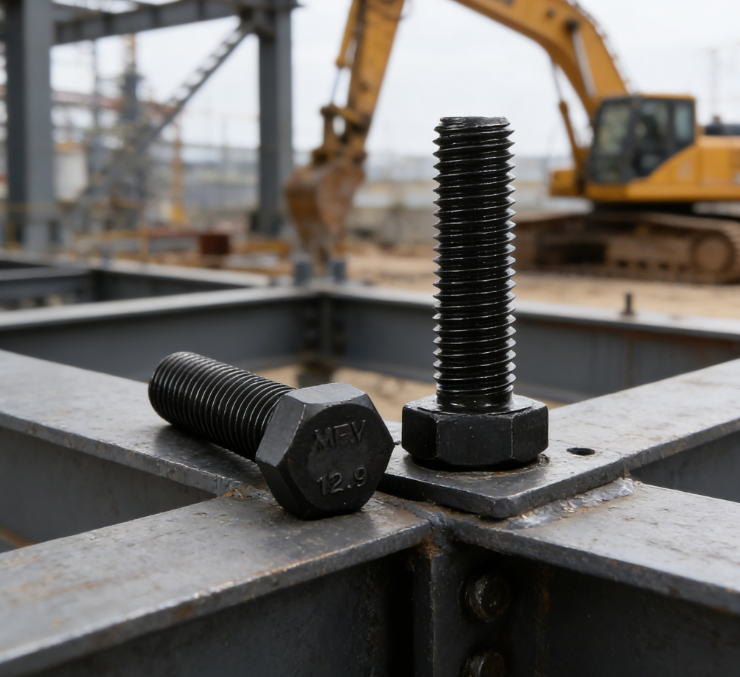



Industrial assembly projects depend heavily on reliable mechanical fasteners to maintain structural integrity under load. Furthermore, selecting under-spec threaded fasteners often causes joint loosening and catastrophic structural failure. Today, specifying a high-grade hex bolt screw secures critical machinery components against severe operational stress. Consequently, engineering teams optimize joint clamping force while ensuring lead-free compliance across modern industrial manufacturing processes.
Our heavy-duty threaded fastener series solves complex structural joining challenges effortlessly. Therefore, project managers replace lower-tier commercial hardware with precision-engineered alloy components. Specifically, our line features high-strength carbon steel construction with durable protective coatings. Explore our product-category for advanced industrial fasteners and structural hardware.
In addition, standardized manufacturing compliance guarantees full thread interchangeability across global machinery platforms. Consequently, maintenance technicians replace worn industrial fasteners without thread binding or sizing mismatches. Furthermore, black oxide surface treatments provide reliable corrosion protection in industrial environments.

Fastener Selection Challenges: Resolving 4 Common Mechanical Issues
Design engineers encounter distinct physical and chemical stress factors when choosing mechanical fasteners for machinery. Below, we examine four primary joint failure challenges and our technical fastener solutions.
Structural Joint Shearing Under Extreme Mechanical Stress
Standard low-carbon screws stretch or shear when subjected to heavy dynamic shock loads. Specifically, low-grade fasteners lack sufficient tensile yield strength to maintain joint clamping force. Therefore, heavy equipment manufacturing requires ultra-high tensile strength structural components. Consequently, specifying a 12.9 grade hex head bolt prevents bolt shearing under extreme operational loads.
Example: Industrial stamping presses experience severe repetitive vibration during high-speed production cycles. Standard 8.8 grade hardware stretches over time, creating loose structural joints and equipment alignment errors. In contrast, our 12.9 grade alloy construction delivers superior tensile strength to absorb shock forces smoothly. Thus, heavy machinery maintains tight structural alignment throughout continuous operation.
In addition, high tensile capability permits using smaller bolt diameters without sacrificing overall joint strength. Furthermore, reduced fastener size minimizes overall housing weight across mobile industrial equipment. As a result, engineering designs achieve optimal strength-to-weight ratios effortlessly.
Fastener Surface Corrosion in Harsh Factory Environments
Uncoated carbon steel bolts oxidize rapidly when exposed to humidity, industrial lubricants, and mild chemicals. Specifically, surface rust freezes threaded engagements, making routine maintenance and part replacement difficult. Therefore, factory equipment requires protective surface finishing across all exposed hardware. Consequently, installing a DIN933 black finish hex screw resists surface oxidation effectively.
Example: Automated assembly line conveyors operate inside humid manufacturing plants using water-based chemical coolants. Bare steel bolts form heavy surface rust within months, seizing threads inside tapped machinery blocks. Check our technical-guide for protective coating resistance metrics.
In contrast, our black coating treatment acts as a protective barrier against atmospheric moisture and chemical vapor. Furthermore, black oxide finishes retain protective oil films across precision-cut threads. Thus, maintenance crews disassemble factory equipment cleanly during routine servicing intervals.
Inconsistent Thread Pitch Causing Thread Galling and Seizure
Non-standard or poorly rolled bolt threads bind during high-torque installation into tapped holes. Specifically, uneven thread pitch damages internal receiving threads, stripping expensive cast iron equipment blocks. Therefore, high-speed assembly lines require strict adherence to international dimensional standards. Consequently, choosing a high strength carbon steel bolt with DIN933 compliance guarantees smooth threading.
Example: Automotive engine builders install hundreds of bolts daily using high-speed pneumatic torque drivers. Variable thread tolerances cause binding, tripping driver torque sensors prematurely before full joint seating. In contrast, fully threaded DIN933 manufacturing ensures uniform pitch tolerances from under-head to tip.
Additionally, precise thread geometry distributes clamping tension evenly across the entire thread engagement length. Consequently, female threads in cast iron components experience reduced localized stress concentration. Thus, critical machinery castings avoid expensive thread stripping during assembly.
Fastener Component Incompatibility in Combined Assemblies
Mixing incompatible hardware grades causes premature thread stripping or uneven clamp load distribution. Specifically, pairing ultra-high-strength bolts with soft, low-grade nuts strips internal nut threads under torque. However, selecting properly matched receiving components ensures optimal mechanical load transfer across joints.
Example: Structural steel fabricators connect heavy support frames using high-torque tightening tools. Using low-grade commercial nuts with 12.9 grade bolts strips nut threads before reaching target preload. In contrast, pairing our 12.9 grade bolts with compatible 304 stainless steel hex nuts and flat washers balances load distribution.
Moreover, flat washers spread high clamping force over wider surface areas, preventing soft metal crushing. Consequently, bolted joints maintain full clamping tension without sinking into softer substrate materials. Thus, structural frames remain rigid and secure over extended operational lifespans.
Technical Solutions: Precision Design of the 12.9 Grade Hex Head Bolt
Superior alloy metallurgy and strict adherence to European manufacturing standards ensure reliable mechanical performance. Furthermore, precision machining delivers exact thread profiles, clean hex heads, and long-lasting structural strength.
High-Strength Carbon Steel and DIN933 Standard Compliance
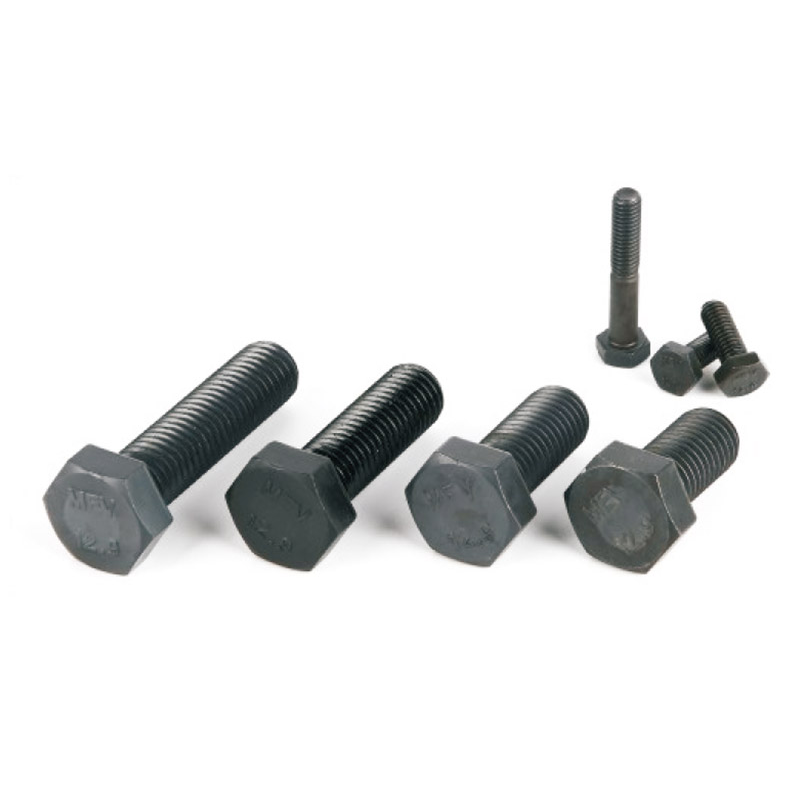
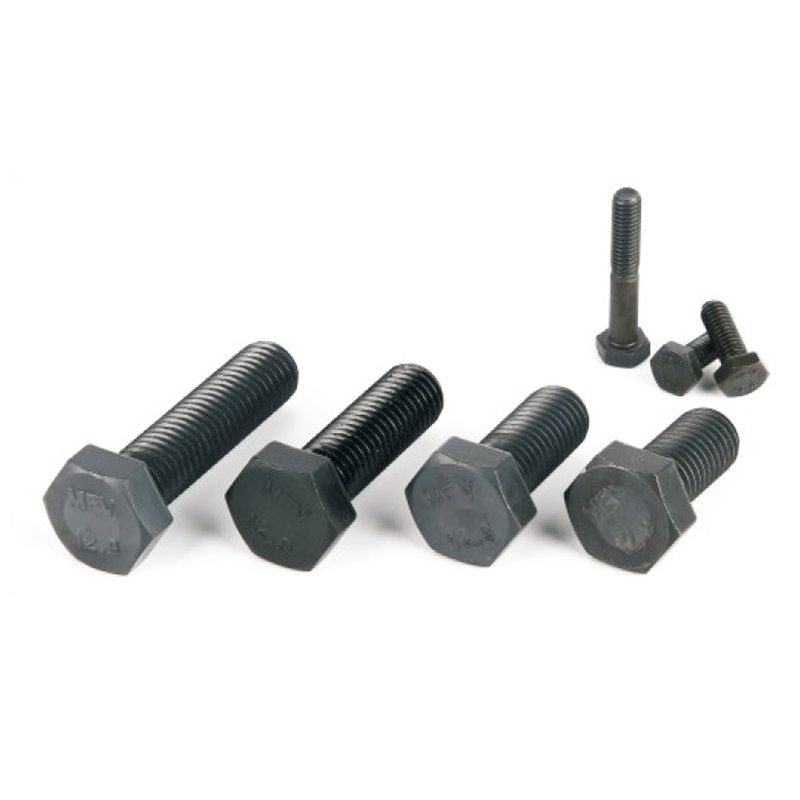
Engineers manufactured this fastener series from high-strength carbon steel heat-treated for maximum toughness. Specifically, Grade 12.9 represents one of the highest strength classifications for steel industrial threaded fasteners. Furthermore, strict compliance with the DIN933 standard guarantees full-thread coverage across all available lengths. Consequently, users achieve exceptional clamping force with a hex head bolt built for demanding tasks.
In addition, standard sizing examples like M3 × 16 feature a 3mm thread diameter and a 16mm shaft length. Furthermore, precision-formed hex heads allow high torque transmission using standard socket wrenches without head rounding. Therefore, industrial assembly teams complete high-torque fastening procedures quickly and safely.
Protective Black Surface Finish and Material Compatibility
Our bolts feature a clean black coating that enhances corrosion resistance while providing a sleek industrial appearance. Specifically, the thin protective layer preserves original thread dimensions without adding thick paint buildup. Furthermore, these bolts pair seamlessly with matching 304 stainless steel hex nuts, 8.8 grade hex bolts, and hardened flat washers. Learn more in our product-category industrial hardware selection guide.
Moreover, protective plastic bag and cardboard box packaging keeps hardware clean and dry during transit. Thus, bulk assembly plants receive pristine fasteners ready for immediate automated sorting and installation. Consequently, factory assembly workflows run smoothly without hardware quality delays.
Product Parameter & Specification Overview
Review key specifications comparing standard commercial hardware against our 12.9 Grade Hex Head Bolt.
| Technical Parameter | Standard Commercial Bolt | 12.9 Grade Hex Head Bolt | Industrial Performance Value |
| Material Grade | Grade 4.8 / 8.8 Low Carbon Steel | Grade 12.9 High-Strength Carbon Steel | Superior Tensile Strength & Yield Resistance |
| Dimensional Standard | Non-Standard / Variable Pitch | DIN933 Full Thread Compliance | Guaranteed International Interchangeability |
| Surface Treatment | Bare / Plain Uncoated Finish | Protective Black Finish Coating | Shields Fastener Against Surface Corrosion |
| Thread Engagement | Partial Threading / Inconsistent | Full Thread Length (e.g., M3 × 16) | Maximum Clamping Distribution in Tapped Holes |
| Compatible Hardware | Soft Steel Commercial Nuts | 304 Stainless Nuts, Washers, 8.8 Bolts | Prevents Thread Stripping & Substrate Crushing |
| Packaging Protocol | Loose Bulk Shipping | Protective Plastic Bag & Cardboard Box | Keeps Hardware Clean & Organized for Assembly |
Versatile Applications for Heavy Industrial Engineering
Modern industrial manufacturing requires versatile fastening hardware that withstands extreme mechanical stress across diverse applications. Furthermore, high-strength carbon steel bolts deliver reliable performance in heavy machinery and structural installations.
For instance, mechanical equipment builders deploy 12.9 grade bolts in hydraulic pumps, gearboxes, and automated CNC machinery. Specifically, technicians torque bolts to precise specs, locking heavy internal components firmly against operational vibration. Consequently, industrial machinery operates continuously without suffering joint separation or fluid leakage. Explore options in our technical-guide mechanical fastening reference manual.
Additionally, automotive engineers and structural fabricators utilize black-finished hex bolts across frame assemblies and engine mounts. High tensile strength resists dynamic shear forces, while compact head profiles fit tightly inside restricted engine bays. Thus, vehicles maintain structural integrity under severe off-road driving conditions. Therefore, our 12.9 grade hex head bolt successfully combines extreme tensile strength, protective finishing, and international standard compliance.