



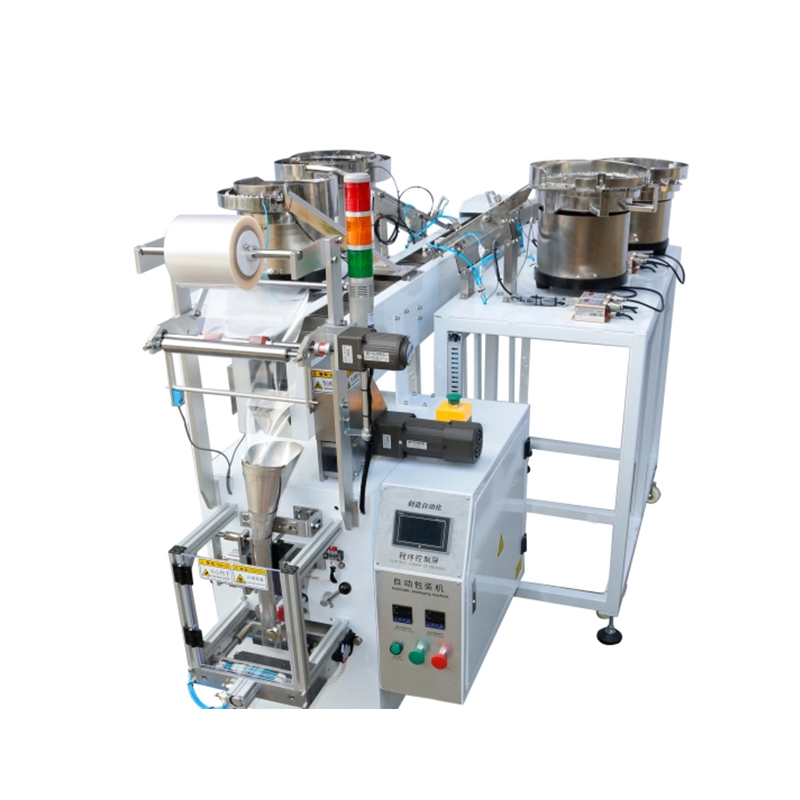
Industrial hardware manufacturers often struggle with manual sorting errors during large-scale packaging operations. Furthermore, traditional hand-counting methods slow down production lines while increasing labor overhead costs. Today, deploying an automatic screw packing machine revolutionizes hardware kitting accuracy and throughput speeds. Consequently, manufacturing facilities optimize fulfillment productivity while maintaining lead-free compliance across modern automated packaging equipment.
Our advanced hardware packaging system automates component feeding, counting, filling, and sealing processes. Therefore, factory managers replace manual packing tables with streamlined, high-speed automated machinery. Specifically, our system packages up to 20 different component types simultaneously into neat bags. Explore our product-category for advanced hardware packaging machines and custom feeder bowls.
In addition, integrated optical sensors verify piece counts instantly before final bag thermal sealing. Consequently, furniture kits and electrical hardware packs ship with zero missing assembly screws. Furthermore, programmable logic controllers ensure continuous, maintenance-free operation across busy multi-shift factory floors.
Packaging Challenges: Resolving 4 Hardware Kitting Problems
Hardware manufacturers face distinct quality control and operational bottlenecks when utilizing manual packaging workflows. Below, we examine four primary hardware kitting challenges and our technical equipment solutions.
High Human Error Rates in Multi-Part Kitting Bags
Manual workers filling mixed hardware bags frequently drop or miscount small assembly fasteners. Specifically, missing screws trigger customer returns, damaging brand reputation for furniture and appliance brands. Therefore, high-volume hardware manufacturers require automated optical verification technology. Consequently, choosing a hardware packaging machine eliminates manual counting errors across complex mixed-part kits.
Example: Flat-pack furniture kits require exactly twelve wood screws, eight cam locks, and four dowels. Manual workers miscount small parts frequently during repetitive eight-hour packing shifts. In contrast, our automated system feeds and counts each fastener type through dedicated vibratory tracks. Thus, every sealed hardware bag contains exact component quantities consistently.
In addition, automated vibratory bowl alarms alert operators instantly if part hoppers run empty. Furthermore, fault display screens pinpoint feed jams quickly to prevent empty bag sealing cycles. As a result, hardware suppliers achieve pristine kit accuracy across every production batch.
Slow Manual Packing Speeds Bottlenecking Factory Output
Hand-sorting fasteners into plastic bags limits daily packaging output severely during peak sales seasons. Specifically, slow manual kitting lines force finished goods inventory to pile up in warehouses. Therefore, growing hardware suppliers demand high-speed automated packaging machinery. Consequently, installing an automatic screw counting machine increases daily packaging throughput exponentially.
Example: A sanitary ware manufacturer packaging mounting hardware kits manually yields only hundreds of bags per shift. Increasing production requires hiring expensive seasonal temp labor and expanding workspace footprints. Check our technical-guide for automated packaging speed benchmarks.
In contrast, our automated feeder bowls sort, count, drop, and seal hardware bags continuously. Furthermore, adjustable packaging speeds allow operators to match upstream manufacturing line output effortlessly. Thus, factories clear production backlogs quickly while maintaining lean operational footprints.
Complex Multi-Component Sorting Requiring Massive Floor Space
Packaging flat-pack furniture kits with 10 to 20 unique parts traditionally requires massive manual assembly lines. Specifically, long tables lined with workers consume valuable factory floor space inefficiently. Therefore, space-constrained manufacturing plants require compact, multi-feeder automated packing systems. Consequently, adopting a multi component hardware packaging system consolidates complex kitting into one footprint.
Example: Lighting fixture manufacturers kit multiple small screws, wire nuts, and mounting brackets simultaneously. Setting up separate manual stations for twenty distinct parts clutters warehouse floors completely. In contrast, our modular machine integrates up to twenty vibratory feeder bowls around a single central conveyor.
Additionally, customized feeder bowls accommodate odd-shaped metal stampings and injection-molded plastic components seamlessly. Consequently, plant managers reclaim valuable floor space for core manufacturing machinery. Thus, facility layouts remain compact, organized, and highly productive.
Poor Bag Sealing Integrity Causing Transit Hardware Loss
Inconsistent manual thermal sealers create weak bag seams that burst open during transit. Specifically, loose hardware spills inside shipping cartons, scratching finished furniture panels and light fixtures. However, unique automated sealing technology creates neat, high-strength package closures consistently.
Example: Heavy steel bolts shipped in thin, poorly sealed poly bags rupture seams during overseas transit. Hardware spills into shipping containers, resulting in expensive rejected shipments from retail buyers. In contrast, our precision thermal sealing jaws apply uniform pressure and heat across every bag seam.
Moreover, neat package closures enhance retail product presentation significantly inside store display boxes. Consequently, packaged hardware kits remain intact and secure throughout long global distribution chains. Thus, brand manufacturers protect product quality from factory floors to end customer hands.
Technical Solutions: Precision Engineering of the Packaging Machine
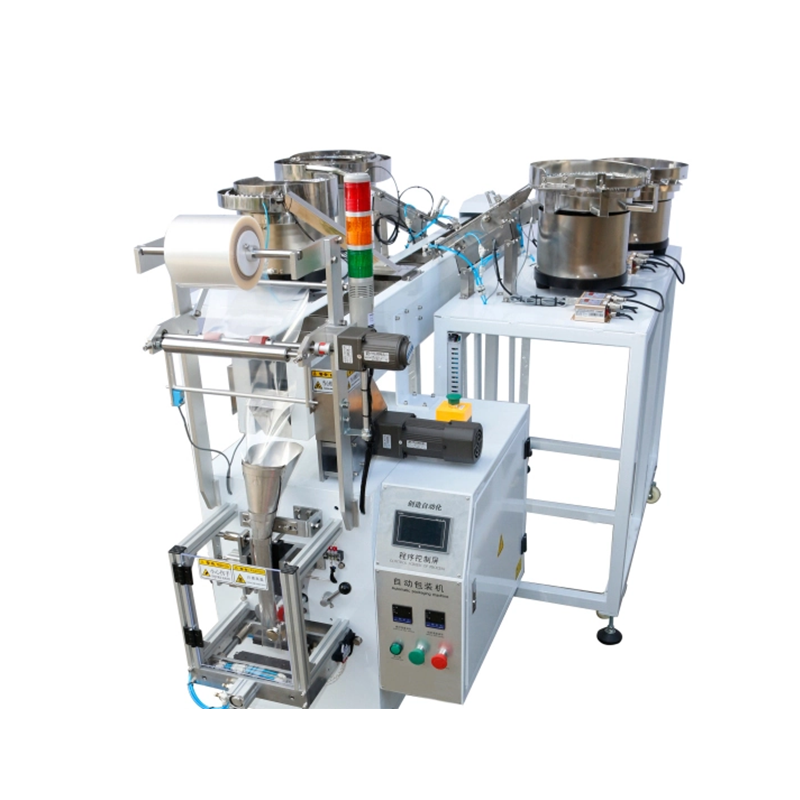
Superior hardware automation combines advanced sensor technology with industrial-grade electronic control systems. Furthermore, user-friendly touch-screen interfaces simplify daily machine operation, part switching, and speed adjustments.
KEYENCE Fiber Sensors and Delta PLC Control Architecture
Engineers integrated high-precision KEYENCE optical sensors within every feeder bowl discharge chute. Specifically, these advanced fiber sensors detect fast-falling screws accurately, eliminating double-counting errors. Furthermore, a reliable Delta PLC control system governs overall machine timing, feeding, and bag sealing cycles. Consequently, operators rely on a high precision screw filling machine built for maintenance-free stability.
In addition, a microcomputer touch-screen interface features intuitive bilingual operation in English and Chinese. Therefore, operators adjust batch counts, bag lengths, and feeding speeds without complex programming knowledge. Consequently, line turnover times between different hardware kits drop from hours to minutes.
Unique Thermal Sealing and Custom Feeder Bowl Engineering
Our hardware packaging system utilizes proprietary sealing technology to deliver clean, burst-proof bag closures. Specifically, heated sealing bars weld poly film smoothly without leaving rough film edges or burn holes. Furthermore, our engineering team customizes vibratory bowl tracks to handle special-shaped hardware and plastic parts. Learn more in our product-category custom automation gallery.
Moreover, integrated alarm systems monitor component feeding continuously, pausing operation if feeder tracks run empty. Thus, automated packaging lines run smoothly without producing incomplete or unsealed hardware bags. Consequently, overall manufacturing efficiency increases while reducing material waste.
Product Parameter & Specification Overview
Review key specifications comparing traditional manual packing against our Fully Automatic Screw Packaging Machine.
| Technical Parameter / Feature | Manual Kitting Workstations | Fully Automatic Screw Packaging Machine | Operational & Accuracy Benefit |
| Counting Technology | Human Eye / Manual Hand Count | High-Precision KEYENCE Fiber Sensors | Eliminates Human Error & Missing Parts |
| Component Mix Capacity | Limited / Highly Error-Prone | 1 to 20 Different Component Types | Handles Complex Multi-Part Furniture Kits |
| Control System | None / Manual Labor Dependent | Industrial Delta PLC Control System | Stable, Maintenance-Free Operation |
| User Interface | Manual Tally Sheets | Bilingual Touch-Screen (English & Chinese) | Easy Setup & Fast Kit Conversion |
| Fault Monitoring | Delayed Manual Spot Checks | Vibratory Bowl Alarm & Fault Display | Stops Production Instantly on Jams |
| Sealing Quality | Variable Manual Impulse Sealing | Unique High-Strength Sealing Technology | Neat, Burst-Proof Bag Closure Integrity |
Versatile Applications in Hardware Manufacturing
Modern industrial sectors require flexible automated packaging solutions that adapt across diverse hardware product lines. Furthermore, fully automatic counting and filling machines suit various commercial and building material applications.
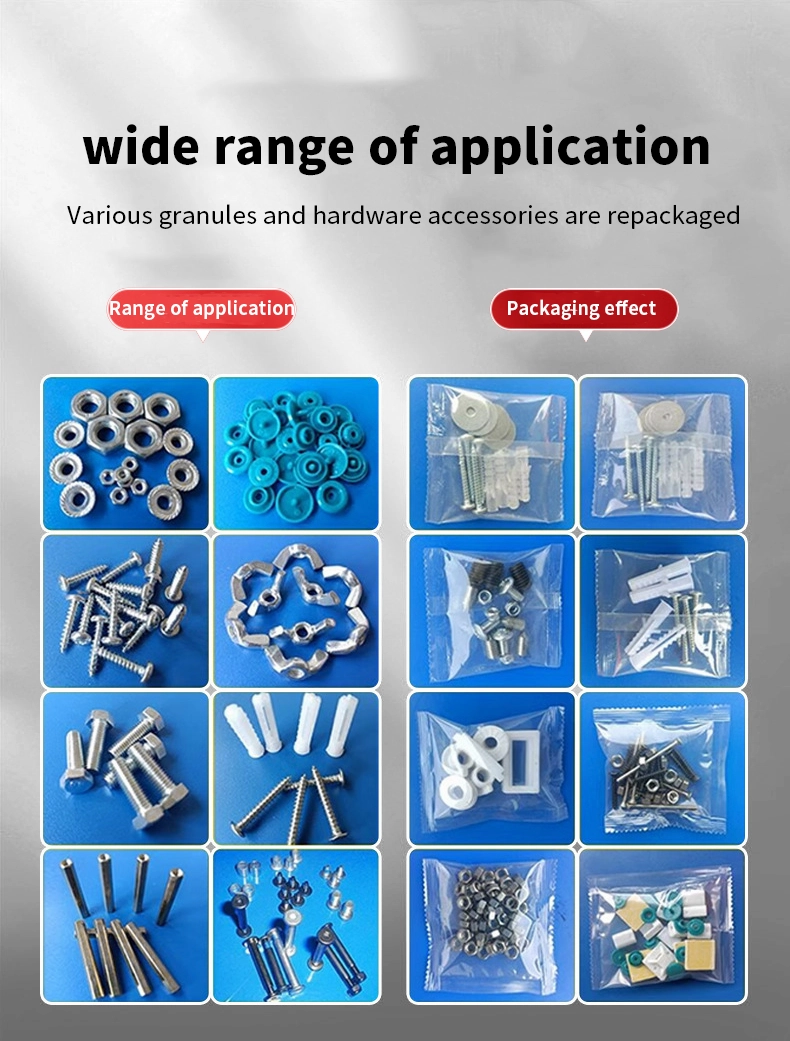
For instance, furniture, sanitary ware, and lighting manufacturers deploy automatic packing systems for assembly hardware kits. Specifically, machines count wood screws, hex nuts, wall anchors, and plastic washers into single sealed bags automatically. Consequently, consumer brands improve end-user assembly experiences while reducing customer service shortage claims. Explore options in our product-category packaging automation catalog.
Additionally, electrical appliance and building material suppliers utilize automated packaging lines for bulk hardware distribution. Customizable feeder bowls handle metal brackets, electrical terminals, and threaded fasteners effortlessly. Thus, factories maintain high-speed output across changing product catalog specifications. Therefore, our Fully Automatic Screw & Hardware Packaging Machine successfully merges high-precision counting, multi-part versatility, and reliable industrial automation.