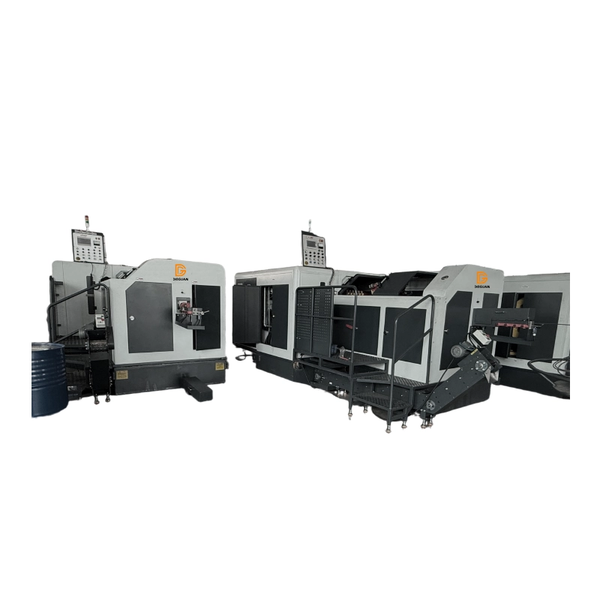



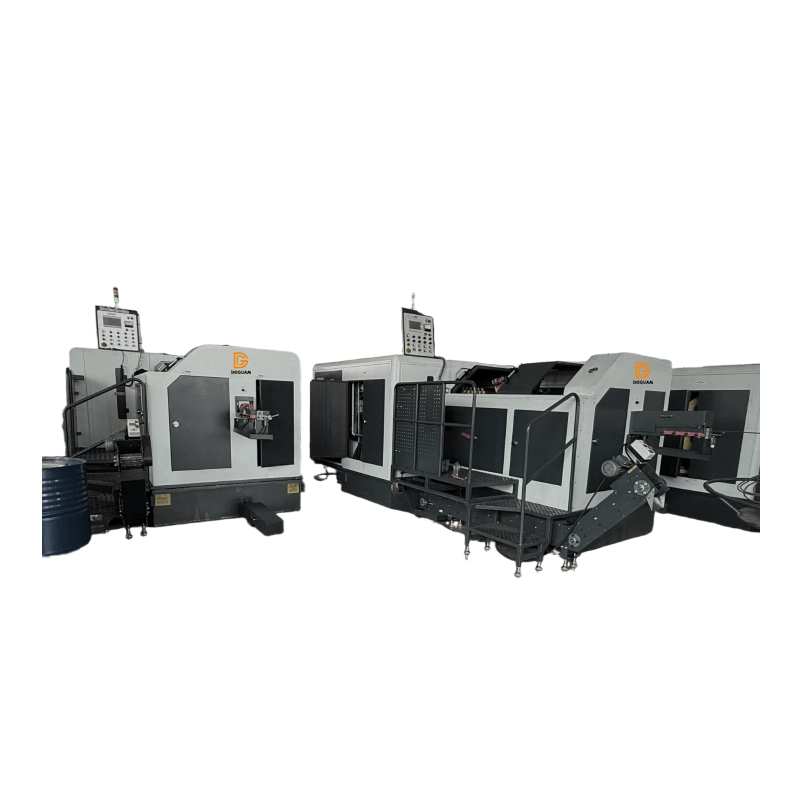
High-volume hardware production requires superior precision, fast cycle times, and minimal material waste. Investing in a modern multi-station nut forming machine transforms industrial manufacturing efficiency. Consequently, fastener factories achieve strict lead-free compliance and exact thread tolerances. Furthermore, automated cold forming replaces traditional manual secondary machining processes. Therefore, leading hardware plants maximize daily productivity while cutting operational expenses.
High-Cost Pain Point Scenarios in Nut Manufacturing
Slow Production Cycles with Single-Station Machinery
Traditional single-pass cold headers operate at sluggish mechanical forming rates. In addition, frequent material transfers slow down overall factory workflow. As a result, plant managers struggle to meet growing volume demands.
Severe Material Scrap and Manual Sorting Labor
Manual scrap separation delays continuous hardware manufacturing cycles significantly. Furthermore, mixed metal waste damages downstream secondary thread tapping equipment. Consequently, factories waste excessive raw labor and expensive material stock.
Thread Distortion and Inconsistent Component Dimensions
Uneven forming pressure causes dimensional variance across high-volume nut batches. In addition, weak internal structures lead to thread stripping during assembly. Therefore, quality control teams reject high quantities of finished hardware.
Advanced Technical Solutions for High-Efficiency Nut Forming
Parallel Cutting and Fully Automatic One-Time Forming
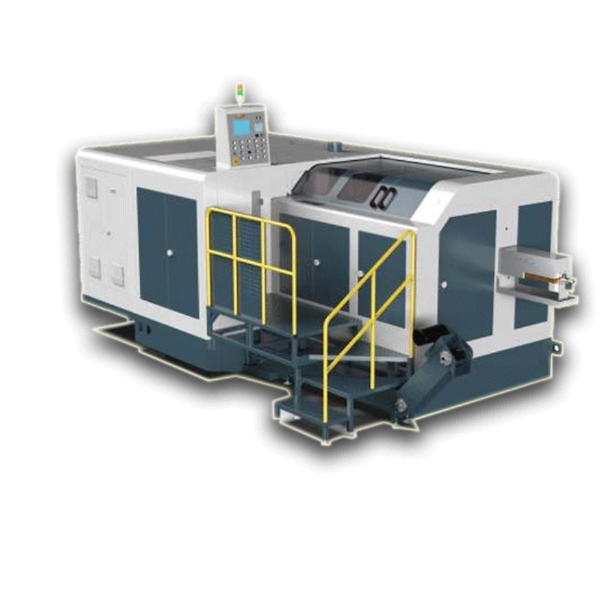
Our multi-station nut making machine adopts a parallel cutting and feeding system. Specifically, 3 dedicated forming stations complete complex parts in one step. Thus, the unit crafts M3-M6 standard nuts, flange nuts, and lighter components smoothly. For additional cold heading machinery options, Explore Our Fastener Forming Machinery Line.
High-Speed Output Reaching 130 Pieces Per Minute
Driven by a powerful 5.5kw 6-pole motor, the machine delivers high performance. Furthermore, it achieves exceptional forming speeds between 120 and 130 pieces per minute. Consequently, hardware plants dramatically increase daily output while maintaining exact alignment. You can inspect complete mechanical drive specifications in our Read Our Complete Nut Machine Engineering Guide.
Automatic Scrap Separation and Continuous Stability
Integrated sorting mechanisms separate finished products from scrap materials automatically. Moreover, this feature reduces operator labor intensity and prevents machine jamming. Therefore, the robust structure supports stable, continuous heavy-duty industrial operation. Discover more automated metal forming equipment at Browse Full Fastener Machinery Inventory.

Product Specifications and Performance Comparison
The table below contrasts standard single-station headers against our multi-station automatic nut machine:
| Feature / Technical Parameter | Single-Station Header | Multi-Station Automatic Nut Machine |
| Forming Stations | 1 Station | 3 Synchronized Forming Stations |
| Production Efficiency | 40 – 60 pieces/minute | 120 – 130 pieces/minute High Speed |
| Feeding & Cutting System | Standard Mechanical Feed | Parallel Cutting & Feeding System |
| Station Spacing & Stroke | Fixed / Short Stroke | 60mm Spacing / 85mm Rod Stroke |
| Scrap Handling | Manual Sorting Required | Automatic Product & Scrap Separation |
| Material Versatility | Soft Carbon Steel Only | Stainless Steel, Flange Nuts & Alloy Parts |
| Environmental Standard | Basic Commercial | Lead-Free Compliance & CE / ISO Certified |
Frequently Asked Questions (FAQ)
What types of components can this multi-station nut forming machine produce?
It produces M3-M6 standard nuts, non-standard nuts, flange nuts, lighter components, and stainless steel parts.
How fast is the production output of the automatic nut machine?
The machine achieves high forming speeds ranging between 120 and 130 pieces per minute.
How does automatic scrap separation benefit fastener plants?
It separates finished nuts from scrap automatically, reducing labor intensity and increasing continuous productivity.
Why is a parallel cutting system critical for high-consistency nut forming?
Parallel cutting ensures clean raw material cuts, delivering exact weight precision and consistent geometry every cycle.